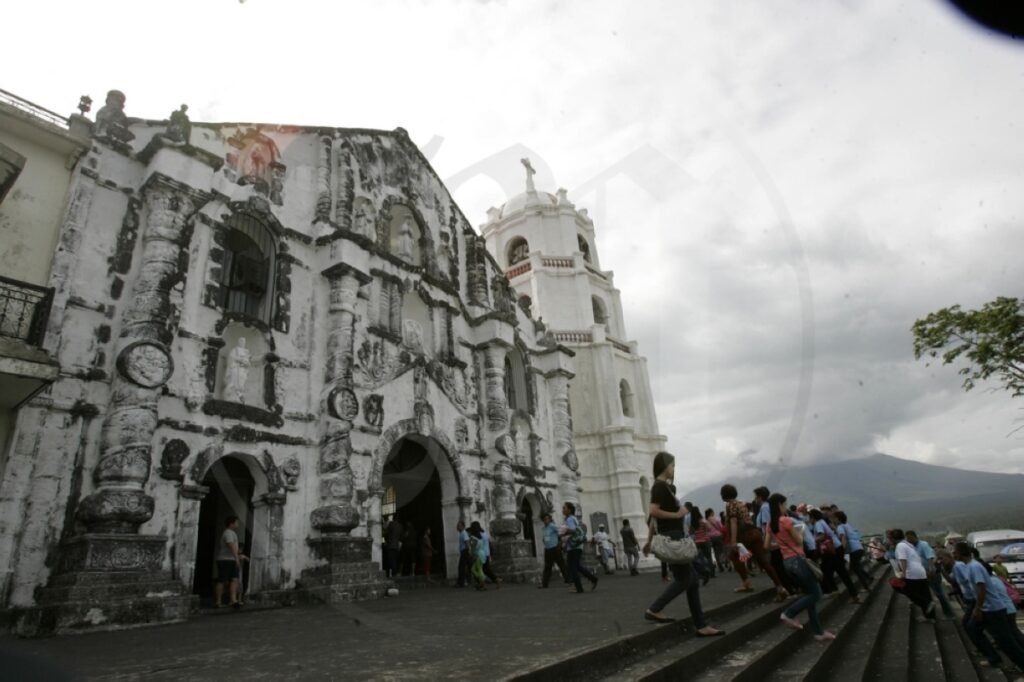
As Holy Week deepens and roads begin filling with families moving quietly from one church to the next, Visita Iglesia once again takes its place at the center of Filipino Catholic life.
For many, it is a yearly ritual done almost by instinct: seven churches, a set of prayers, a few moments of silence before the Blessed Sacrament. But behind that familiar practice is a much older story — one that began in Rome, traveled through Spanish evangelization, and eventually became one of the Philippines’ most enduring Lenten traditions.
The devotion is widely traced to the Roman pilgrimage of the Seven Churches, a practice associated with St. Philip Neri in the 16th century. Vatican News notes that in 1553, Philip Neri began making a one-day pilgrimage to seven churches in Rome as an act of devotion, and the practice soon became communal, with pilgrims praying and reflecting along the route. What began as a specifically Roman expression of penitence would, over time, spread across the Catholic world.
In the Philippines, that custom arrived with the spread of Catholicism during the Spanish colonial era. Church accounts published by CBCP Monitor say the tradition reached local shores through the evangelization of the archipelago and came to be centered in Intramuros, then regarded as the country’s religious and spiritual capital.
In its earlier form, pilgrims were said to visit the original seven Baroque churches within the walled city, making old Manila both a place of worship and a natural pilgrimage route during Holy Week.
That old geography did not survive history untouched. The devastation of Manila during World War II changed the religious landscape of Intramuros, and only Manila Cathedral and San Agustin Church remain from the original pilgrim sites identified in the CBCP account.
Yet the practice itself endured, expanding beyond Intramuros and taking root across provinces, cities and towns, where parish churches, chapels and shrines became part of local Holy Week routes.
Today, Visita Iglesia remains both structured and flexible. The most common form is to visit seven churches on Maundy Thursday or Good Friday, though some devotees go to 14, often linking the number to the Stations of the Cross.
“Catholics & Cultures” describes it as one of the most popular Holy Week “panata” traditions among Filipino Catholics, with some pilgrims walking barefoot or even carrying a cross, while others travel by car with family and friends. The point, regardless of method, is prayer, reflection and a conscious act of sacrifice.
That last part may explain why the devotion continues to resonate so deeply in the Philippines. Here, Visita Iglesia is not simply a church-hopping custom or a heritage itinerary. It is tied to “panata” — the deeply personal Filipino understanding of faith as something expressed through effort, endurance and intention. Some pray the Rosary. Others meditate silently on Christ’s Passion. Many leave alms for the poor.
The form may vary from one pilgrim to another, but the purpose remains the same: to keep watch, to remember and to walk, however briefly, in the shadow of Christ’s suffering.
Even in modern times, the tradition has shown an ability to adapt without losing its spiritual core. Accounts note that many churches stay open late during Holy Week to receive pilgrims, and newer forms such as bicycle pilgrimages have emerged in recent years. During the pandemic, church groups also promoted online participation for those unable to travel, proving that while the route may change, the devotion itself remains intact.
In the end, the history of Visita Iglesia in the Philippines is also the history of how Filipinos made a borrowed Catholic tradition their own. What began as a Roman penitential walk became, over centuries, a distinctly Filipino act of remembrance — one carried by families, shaped by local memory and renewed every Holy Week.